A Practical Introduction to NGS Data Analysis and Variant Calling
From Quality Control and Read Mapping to DNA Variant Calling (VCF)

Advance your research with the core skills to understand NGS data, spot common pitfalls, and run essential first analyses yourself - step-by-step, beginner-friendly, and fully hands-on.

In a nutshell

  • Build the essential Linux command-line skills used in everyday NGS bioinformatics
  • Understand key NGS concepts: technology, algorithms, and file formats (FASTQ, BAM, VCF)
  • Use widely adopted open-source tools to process and inspect sequencing data
  • Perform first downstream analyses to study genetic variation (variant calling & filtering)

When?
February 24-26, 2026

Where?
Munich, Germany
52 votes

This workshop is designed to give you a solid, practical understanding of Next-Generation Sequencing (NGS) with a clear focus on the bioinformatics steps that most often determine whether an analysis is trustworthy.

You will learn how to assess your own NGS data, identify common problems and error sources, and complete a first downstream analysis workflow, including DNA variant calling.

In the course we work with a real-life Illumina NGS dataset.

After 3 days, you will be able to:

  • Evaluate raw sequencing data (FASTQ) using quality control best practices
  • Perform preprocessing (adapter clipping, quality trimming) and understand why you do it
  • Map reads to a reference genome and interpret mapping quality (SAM/BAM)
  • Inspect alignments in IGV/UCSC to validate findings
  • Generate and interpret a VCF, apply basic filtering, and avoid common pitfalls

Go to registration.

Get trained by experts

Our trainers bring proven academic and/or industry experience in NGS data analysis — so you get answers that are practical, current, and project-driven.

Open source NGS tools

We use tools that are free to use and widely adopted. We also compare alternatives (e.g., different mappers) because the “best” tool depends on the biological question.

Learn effectively with well-curated materials

We provide carefully prepared datasets and step-by-step exercises. You can take home all materials, tools, and results to continue after the workshop.

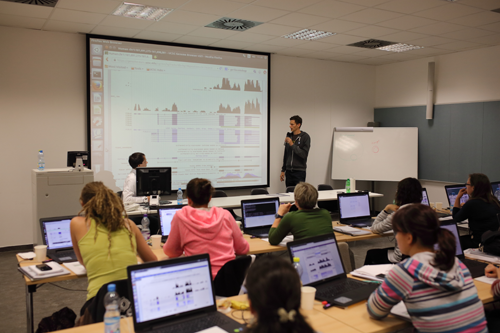
This beginner-friendly workshop combines short theory blocks with extensive hands-on exercises. It consists of three modules:

  1. NGS Technologies:
    Compare sequencing methods and understand the implications for data analysis.
  2. Practical Bioinformatics (with Linux):
    Learn the essential command-line tools and file formats used in NGS workflows — and overcome the typical first hurdles.
  3. Introduction to NGS data analysis:
    Work through key first analysis tasks across common NGS applications, from QC to variant calling.

Detailed Course Program


NGS Technologies

  • Sequencing technologies from a data analyst’s perspective
  • Common NGS data analysis issues (error sources & typical artefacts)
  • Applications of sequencing technologies
  • Notations and NGS terminology

Practical Bioinformatics (with Linux)

  • Introduction to the command line and essential commands
  • Combining commands using piping and redirection
  • Bioinformatics file formats and databases (e.g., FASTA, BED, UCSC)
  • Working with important toolkits (e.g., samtools)

Introduction to NGS data analysis

  • Raw sequence files (FASTQ format)
  • Preprocessing: QC (FastQC), adapter clipping, quality trimming
  • Read mapping fundamentals (alignment methods, mapping heuristics)
  • Read mapping with common tools (BWA-MEM, Bowtie2, STAR, segemehl)
  • Mapping output (SAM/BAM) and core toolkit (samtools)
  • Mapping statistics and interpretation
  • Visualization of mapped reads (IGV, UCSC)
  • DNA variant calling → VCF → filtering variants

Speakers

Dr. David Langenberger
David has worked with small non-coding RNAs since 2005 and has used NGS technologies since 2006 in multiple large-scale projects, including ICGC. Publications

Dr. Mario Fasold
Mario has worked in bioinformatics since 2007 and has specialized in NGS data analysis since 2011, supporting multiple large consortium sequencing projects. Publications

Requirements

Who is this workshop for: Biologists and data analysts who work with NGS (or plan to) and want a structured, practical entry into NGS data analysis.

Assumed knowledge: A fundamental understanding of molecular biology (DNA, RNA, gene expression, PCR, …)

Helpful but not required: Basic Linux/bioinformatics familiarity (command line, common tools). We start from the basics and guide you step-by-step.

Clarity note: You will work on the Linux command line, but this is not a programming course.

  •   Course materials
  •   Catering during the workshop
  •   Conference dinner
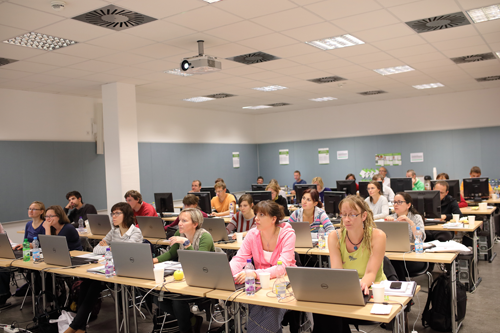
  •   High-performance workstations (no laptop needed)
  •   Downloadable environment for seamless continuation after the course
  •   Certificate

Attendance

Location: cmt GmbH, Hansastraße 32, 80686 Munich, Germany
Language: English
Available seats: 20 (first-come, first-served)

Registration Fee: 989 EUR (excluding VAT)

Travel expenses and accommodation are not covered.

Travel Information - Munich

Key dates

Opening Date of Registration: December 8, 2025
Closing Date of Registration: February 20, 2026
Workshop: February 24-26, 2026 (9 am - 5 pm)

"Amazing value, great organization, well planned, good content, well-paced, good venue, etc." Jovan Livada, Pfizer

"Fantastic course! The instructors demonstrated a deep understanding of each of the topics that were presented and a lot of useful detail was provided." Laura Hill, AstraZeneca

"Very interesting. Learned a lot. Passionate teachers. Really great :)" Antoine Baudrimont, University of Vienna


When you register for this workshop you are agreeing with our Workshop Terms and Conditions. Please read them before you register.


Any Questions? Please feel free to contact our events team.

ecSeq Bioinformatics GmbH
Sternwartenstr. 29
D-04103 Leipzig
Germany
Email: events@ecSeq.com