NGS Epigenomics Workshop
DNA Methylation and Chromatin Landscapes with Bisulfite-seq, ChIP-seq and ATAC-seq
Learn how to process, analyze, and interpret epigenomic NGS data - from raw reads to biological insights — with hands-on workflows for DNA methylation and chromatin profiling.

In a nutshell

  • Learn the essential computing skills for NGS bioinformatics
  • Understand the principles behind bisulfite-seq, ChIP-seq and ATAC-seq
  • Use bioinformatics tools to explore differential changes in DNA methylation
  • Create diagnostic plots and statistics to support robust conclusions
  • Integrate multiple omics layers to interpret complex epigenomic systems
When?
May 6-8, 2026

Where?
Munich, Germany

20 votes

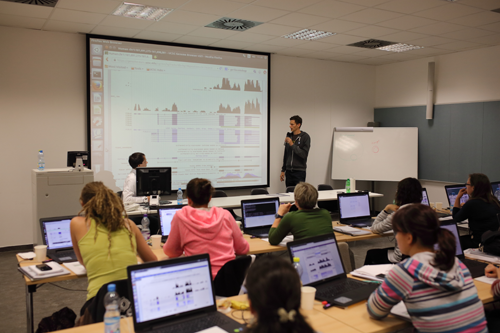
This hands-on workshop teaches practical epigenomic data analysis with next-generation sequencing. Over three days, you will learn how to analyze DNA methylation (bisulfite sequencing) and interpret chromatin signals from ChIP-seq and ATAC-seq, and how to combine these layers to study regulatory landscapes.

Starting from raw sequencing reads, you will gain step-by-step experience in preprocessing, quality control, visualization, and downstream analysis using command-line tools and R-based workflows.

Designed for early-career researchers and beginners in NGS analysis, the course enables you to perform essential first analysis tasks independently - even with little or no computer science background.

By the end of the workshop, you will be able to:

  • Run quality control and preprocessing for epigenomic NGS datasets
  • Map bisulfite-treated reads and generate methylation calls
  • Produce core diagnostic plots (e.g., PCA, clustering, metagene plots) for interpretation
  • Identify differentially methylated regions (DMRs) using real-world data
  • Integrate methylation results with ChIP-seq/ATAC-seq peak data and visualize findings in a genome browser

Go to registration.

Get trained by experts

Our trainers bring proven academic and/or industry experience in NGS data analysis - so you get practical guidance and clear answers throughout the course.

Open source NGS tools

We use open-source tools that you can continue using after the workshop. Where relevant, we compare alternatives (e.g., mappers) and explain when to use which tool.

Learn effectively with well-curated materials

We provide carefully prepared datasets and step-by-step exercises. You can take home all materials, tools, and results created during the course.

This workshop is redesigned for beginners in NGS bioinformatics and comprises three modules:

  1. Applications of NGS in epigenomic data analysis:
    Build a solid foundation in epigenomic biology and key assays (bisulfite-seq, ChIP-seq, ATAC-seq). Get hands-on with the Linux command line, essential file formats, and QC practices for sequencing data.
  2. Mapping of bisulfite sequencing data and processing DNA methylation calls:
    Align bisulfite-treated reads, generate methylation calls, handle technical artefacts, and create first exploratory analyses and plots in R (PCA, clustering, distributions).
  3. Differential methylation analysis and integration of multi-omics datasets:
    Detect differentially methylated regions on real-world data, integrate methylation with ChIP-seq/ATAC-seq peak information, and interpret results with functional annotation and genome browser visualization.

Detailed Course Program


Applications of NGS in epigenomic data analysis

  • Biological context for epigenomic data analysis
  • NGS technologies from an epigenomics perspective
  • When to use bisulfite-seq, ChIP-seq and ATAC-seq - and what each assay measures
  • Linux command line essentials and navigating the file system
  • Core bioinformatics file formats (FASTA, FASTQ, BAM)
  • QC and preprocessing for epigenomic sequencing libraries

Mapping of bisulfite sequencing data and processing DNA methylation calls

  • How bisulfite-treated reads are mapped to a reference genome
  • Common mapping artefacts and biases - and their impact on methylation calling
  • Methylation calling on a single-sample dataset
  • Getting comfortable with data handling in R
  • Post-call filtering and correction of methylation values
  • Summary statistics and plots for comparative analysis
  • Create clustering, PCA, density distributions and metagene plots

Differential methylation analysis and integration of multi-omics datasets

  • Methods for detecting differentially methylated regions (DMRs)
  • Perform differential methylation analysis on a public cancer dataset
  • Integrate methylation with ChIP-seq and/or ATAC-seq peak data
  • Link findings to genomic features and run functional analyses
  • Combine layers in a genome browser for interpretation and reporting
  • Apply the full workflow to derive insights in complex biological systems

Trainers

Dr. Adam Nunn
Adam is a bioinformatician specialized in bisulfite sequencing and NGS pipeline development, with additional expertise in DNA-Seq, bulk RNA-Seq and single-cell RNA-Seq. Publications

Dr. David Langenberger
David has used NGS since 2006 in multiple large-scale projects (including ICGC) and focuses on practical, reproducible analysis workflows and interpretation. Publications

Requirements

This workshop is designed for biologists and data analysts with no or little experience in NGS data analysis.

A fundamental understanding of molecular biology (DNA, RNA, gene expression, PCR, …) is assumed.

Basic Linux/bioinformatics familiarity (command-line usage, common commands and tools) is helpful, but not required - we start from the essentials and guide you step-by-step.

You can prepare with the Learning the Shell Tutorial.

  •   Course materials
  •   Catering during the workshop
  •   Conference dinner
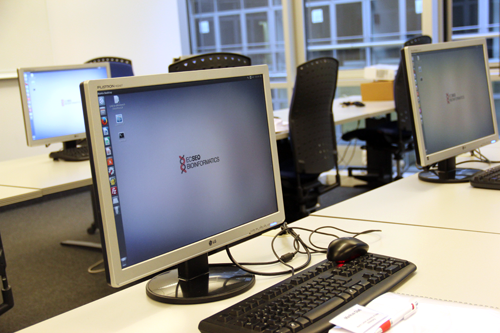
  •   High-performance workstations (no laptop needed)
  •   Networking opportunities
  •   Certificate
  •   Downloadable environment for seamless continuation after the course

Attendance

Location: cmt GmbH, Hansastraße 32, 80686 Munich, Germany
Language: English
Available seats: 20 (first-come, first-served)

Registration Fee: 1089 EUR (excluding VAT)

Travel expenses and accommodation are not covered by the registration fee.

Travel Information - Munich

Key dates

Opening Date of Registration: December 9, 2025
Closing Date of Registration: May 1, 2026
Workshop: May 6-8, 2026 (9 am - 5 pm)

"ecSeq team pays a great attention to equip you to be on your own once back alone in your lab. They are recognized experts on the field and share not only their expertise but also their experience and views. Very valuable." Marc Lamarine, Quartz Bio , Switzerland

"To go from an introduction to methylation to the complete analysis of a published data set in 3 days is an ambitious target and I am delighted that is was so comprehensively achieved. The mix between theory and practical work is very balanced. I highly recommend this course for a strong foundation in the latest methylation analysis methods. The course leaders are experts and so helpful, and to take the operating system, data and commands home at the end of the conference is a huge benefit." Kieran Meade, Teagasc, Ireland

"Very good week of course, very useful for future work on DNA methylation sequencing analysis." Jonathan Landry, EMBL, Germany


When you register for this workshop you are agreeing with our Workshop Terms and Conditions. Please read them before you register.


Any Questions? Please feel free to contact our events team.

ecSeq Bioinformatics GmbH
Sternwartenstr. 29
D-04103 Leipzig
Germany
Email: events@ecSeq.com