On-Site NGS Training for PhD and Research Groups
Practical bioinformatics training for research teams that need to understand, inspect and interpret NGS data together.
Many research groups can generate sequencing data, but do not have immediate access to a bioinformatics core facility or a dedicated analyst. ecSeq brings hands-on NGS bioinformatics training directly to your institute, graduate school or collaborative research project. The course is designed around your team, your scientific field, your experience level and the NGS workflows most relevant to your research.
Ideal for PhD students, postdocs, PIs, wet-lab researchers and interdisciplinary groups that want to build shared NGS competence.
When a whole research group needs NGS competence
NGS projects often involve many people: PhD students, postdocs, technicians, PIs and collaborators. If only one person understands the analysis, the whole project becomes fragile. An on-site course helps your team build a shared language for sequencing data, quality control, analysis workflows and interpretation.
Shared learning
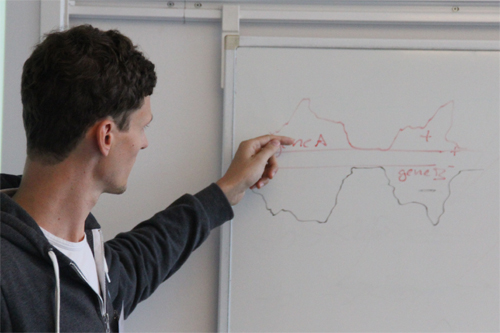
Participants learn the same concepts, use the same terminology and discuss the same practical problems. This is especially valuable for doctoral programmes, collaborative projects and larger research groups.
- Group interaction
- Shared exercises
- Common understanding of NGS workflows
Practical focus
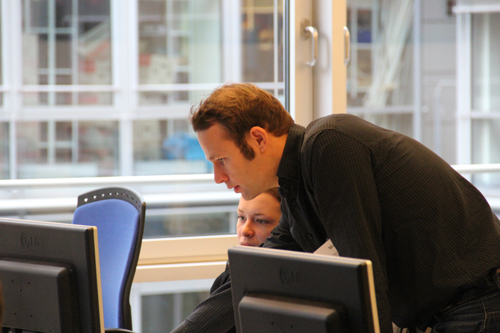
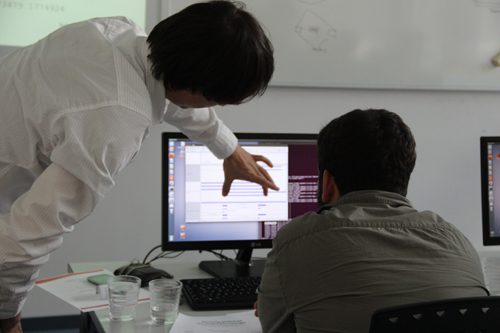
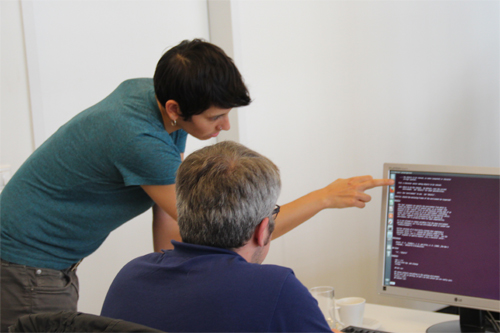
The course is not a passive lecture. Participants work through real analysis steps, inspect results, interpret quality metrics and learn why individual workflow decisions matter.
- Hands-on command-line work
- Prepared datasets and clear exercises
- Direct support from trainers
Better project planning
Researchers who understand the analysis logic can plan experiments more realistically, communicate better with sequencing providers and recognize potential problems earlier.
- Understand data requirements
- Recognize QC problems
- Ask better bioinformatics questions
Less travel, less downtime
Instead of sending many people to a public course, the training takes place at your institute. Only the trainers travel, and participants can learn in their familiar environment.
- No travel days for the whole group
- No hotel costs for all participants
- Works well for groups of 10-25 people
Typical research group scenarios
A doctoral group with 20 researchers
A doctoral programme or research consortium wants to train around 20 scientists in practical NGS data analysis. The participants come from different projects, but they all need a better understanding of sequencing data, quality control, analysis workflows and interpretation. The course should be practical, interactive and useful for building a stronger research community.
An online course is not ideal because the participants should work together, ask questions, discuss results and build a shared understanding as a group. A public course would be expensive because travel costs, accommodation and arrival and departure days would have to be covered for all participants.
With an on-site course, only the trainers travel. The researchers stay in their familiar environment, learn together, interact directly and lose less time away from their projects. This makes the format especially attractive for graduate schools, research groups, SFBs, collaborative projects and institutes that want to train many researchers at once.
Several small groups join forces for one shared course
We also often see a different situation: one small research group is interested in an on-site NGS course, but the number of participants is too low for the format to make financial sense. In this case, a very practical solution is to organize the course together with friendly neighboring groups, collaborators or groups from the same institute, graduate school or research network.
This has two clear advantages. First, the combined group reaches a more suitable number of participants, which makes the course more cost-effective for everyone. Second, the course becomes more than a training event. It creates a focused space where researchers from related groups meet, work through practical problems together and discuss how NGS methods could be used in their own projects.
In practice, this can be surprisingly productive. We have seen researchers use the course setting to exchange ideas, identify shared technical challenges and even sketch new project ideas or collaborations during the training. For groups that already know each other, but rarely have time to work together in a structured way, a joint on-site course can become a very natural networking and idea-generating event.
Why ecSeq?
ecSeq is not a pure training company. We analyze NGS data, develop bioinformatics software, build reproducible pipelines and support real research, biotech and diagnostic projects. This practical background shapes our courses: we do not only explain which command to run, but why a step is needed, what can go wrong, how quality can be assessed and how results should be interpreted.
This is particularly important for research groups. Most participants do not need to become full-time bioinformaticians, but they do need to understand what happens to their data, what the output means and when an analysis result should be questioned.
Training paths for research groups
We combine proven ecSeq course modules into a curriculum that fits your group. A course can start with NGS fundamentals and then focus on the type of data most relevant to your research.
NGS Data Analysis Essentials
The best starting point for mixed groups with little or no practical bioinformatics experience.
- Linux and command-line basics
- FASTQ files and quality control
- Adapter clipping and trimming
- Read mapping and BAM/SAM files
- Genome browser inspection and mapping statistics
Typical duration: 2-3 days
Bulk RNA-Seq Data Analysis
For research groups that generate or plan RNA-seq experiments and want to understand the complete analysis logic.
- RNA-seq experimental design and QC
- Read alignment or transcript quantification
- Gene and transcript count tables
- Differential expression with Bioconductor
- Diagnostic plots, batch effects and interpretation
Typical duration: 2-4 days
Variant Calling and VCF Interpretation
For groups that need to understand DNA sequencing workflows, variants, filtering and common interpretation limits.
- Read alignment and coverage
- Variant calling concepts
- VCF structure and quality fields
- Variant filtering and annotation
- Typical artefacts and interpretation pitfalls
Typical duration: 1-3 days
Single-Cell RNA-Seq Analysis
For research groups entering single-cell analysis and wanting to understand the decisions behind the plots.
- 10x Genomics and Cell Ranger outputs
- Count matrices and single-cell QC
- Seurat-based analysis workflows
- Dimensionality reduction, clustering and marker genes
- Cell type annotation, integration and batch effects
Typical duration: 3 days
NGS Epigenomics
For teams working with regulatory genomics, DNA methylation, chromatin accessibility or protein-DNA binding.
- Bisulfite sequencing and DNA methylation
- ChIP-seq and ATAC-seq analysis concepts
- Peak files, methylation calls and DMRs
- Visualization in genome browsers
- Integration with gene expression and annotation data
Typical duration: 2-4 days
Introduction to Reproducible Workflows
For groups that want to understand how analyses can be documented, repeated and shared more reliably.
- From manual commands to structured workflows
- Basic concepts of reproducibility
- Introduction to workflow thinking
- Container and environment concepts
- When to involve deeper pipeline development support
Typical duration: 1-2 days
How we design the course
Scoping
We discuss the size of your group, the scientific background of the participants, their computational experience, the NGS methods relevant to your projects and the main goal of the training.
Curriculum design
We combine suitable modules from our established NGS workshops into a coherent course. For mixed groups, we usually start with shared foundations before moving into more specific applications.
Technical preparation
We define the setup for the hands-on exercises. Depending on the format, we use carefully prepared ecSeq training datasets, suitable example workflows, your local infrastructure where appropriate, cloud systems or preconfigured training environments.
Hands-on training
The course combines compact theory sessions with practical exercises, discussion and trainer support. Participants learn how results are generated, checked and interpreted.
Handover
Participants receive course materials, example commands, results and guidance for continued learning. The group leaves with a stronger shared understanding of NGS analysis and its limitations.
What your group will take home
The goal is not to turn every participant into a full-time bioinformatician. The goal is to give the group a practical understanding of NGS data analysis and the confidence to evaluate results more critically.
- Practical experience with real NGS tools
- Reusable course materials and example workflows
- Better understanding of FASTQ, BAM, VCF and count matrices
- Ability to interpret QC reports and mapping statistics
- Awareness of common artefacts and analysis pitfalls
- Shared vocabulary for NGS projects
- Better communication with sequencing providers and collaborators
- Improved confidence in planning NGS experiments
- Clearer understanding of when expert support is needed
- Certificate of participation upon request
Experienced by participants from research institutes, universities and hospitals
Participants in ecSeq NGS workshops have come from organizations such as Max Delbrück Center for Molecular Medicine, Max Planck Institute for Biology of Ageing, University of Vienna, Hannover Medical School, San Raffaele Hospital, the German Federal Institute for Risk Assessment and many other universities, hospitals and research institutes.
Frequently asked questions
How many participants should join?
On-site courses usually make most financial sense with at least 10 participants. The format is particularly attractive for groups of around 10-25 people, because travel and accommodation costs for all participants can be avoided.
Can several small groups book a course together?
Yes. This is often a very good solution. Several smaller or collaborating groups can join forces to reach a suitable number of participants, reduce the per-person cost and use the course as a shared training and networking event.
Is this suitable for participants without programming experience?
Yes. Many research-group courses are designed for wet-lab scientists with little or no previous command-line experience. We can start with the necessary Linux and file-format basics before moving into NGS analysis.
Why not just book an online course?
Online courses can work well for individual participants, but they often do not create the same level of interaction, discussion and shared learning within a research group. On-site training is stronger when group cohesion, direct questions and practical discussion are important.
Can the course focus on a specific NGS application?
Yes. The course can focus on RNA-seq, variant calling, single-cell RNA-seq, epigenomics or general NGS data analysis, depending on the needs of your group.
Can mixed groups of wet-lab scientists and computational researchers join?
Yes. Mixed groups are common. We usually build a shared foundation first and then add more advanced discussion where appropriate.
Plan an NGS training for your research group
Tell us about your group size, research field, experience level and the NGS methods most relevant to your projects. We will suggest a realistic on-site course structure.